Treat the cancer.
Spare the nerves.
JNTX-007 is a small molecule that protects and restores sensation in chemotherapy-induced peripheral neuropathy — the untreated nerve damage left behind in millions of cancer survivors. Preclinical, and heading for the clinic.


The problem
Each year, millions of people on chemo face an impossible choice
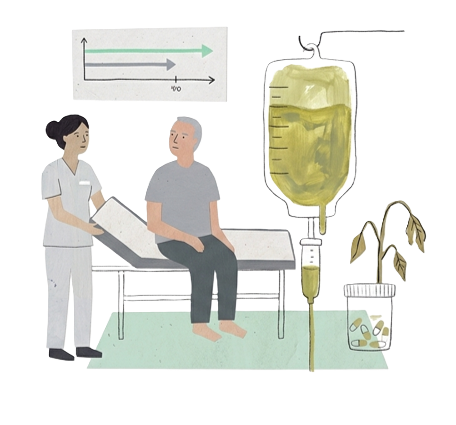
Keep the dose and lose the feeling in your hands and feet — often for good. Or cut the dose, and accept a higher risk that the cancer comes back. Chemotherapy-induced peripheral neuropathy is a decision made on toxicity rather than tumour response, and there is nothing approved to treat it.
or
patients start first-line chemotherapy worldwide every year.
develop peripheral neuropathy within a month of neurotoxic chemotherapy.
still have CIPN six months or more after treatment ends.
drugs prevent or reverse it — only symptomatic options such as duloxetine exist.
CIPN time course: Seretny et al., Pain 2014 (31 studies, 4,179 patients). Persistence corroborated at 31.3% up to 5 years post-oxaliplatin (Selvy et al., J Clin Med 2020, n=406). Chemotherapy demand: Wilson et al., Lancet Oncol 2019.

In the clinic
Patients hide the neuropathy to protect their treatment
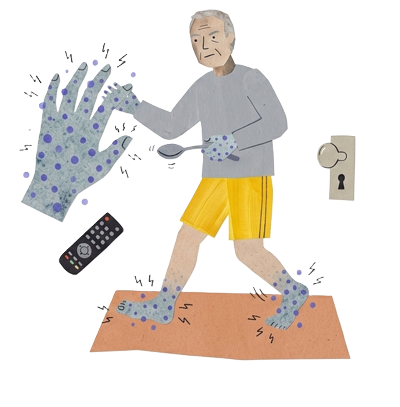
“I can barely feel my hands anymore. But if I tell her, she'll stop the therapy — and the cancer could come back.” The damage goes unspoken, until it's permanent. One survivor put it plainly: chronic numbness means needing help to open a can or turn a page, and the hardest part is the loss of competence.
See how we fix itOur approach
A nerve-protective drug, given alongside chemotherapy
JNTX-007 is a small-molecule HDAC inhibitor that restores the protective acetylation of microtubules in sensory neurons — preserving sensation while chemotherapy proceeds at full dose. It works two axes at a single exposure, which is what separates it from every other HDAC programme in neuropathy.
Swipe to follow the axon →
Chemotherapy strips acetyl groups from α-tubulin. The microtubule track destabilises, transport stalls, and the far ends of the nerve — the fingertips and toes — are starved of the cargo they need. Sensation is lost from the outside in.
Repair the wiring
Restores α-tubulin acetylation, axonal transport and mitochondrial trafficking — the structural, disease-modifying mechanism.
Quiet the circuit
Anti-inflammatory action that calms sensitised neurons, addressing the pain component alongside the structural repair.
Evidence
It works — from human cells to live animals
JNTX-007 hits its molecular targets in human cells, and that translates into recovered sensation in the disease model. Both results are in hand, alongside clean genotoxicity.
Target engagement
Acetylation rose on both axes in human cells, concentration-dependently — confirming JNTX-007 reaches HDAC6 and the Class I enzymes at one exposure.
Functional reversal
In paclitaxel-induced neuropathy in rats, sensation returned at matched safety margins — outperforming ricolinostat.
Genotoxicity
Ames-negative and micronucleus-negative, both non-GLP, with GLP confirmation scheduled in the toxicology package.
Intellectual property
Fully-owned composition-of-matter filing. A freedom-to-operate search found no blocking art.
Competitive lane
No approved CIPN therapy exists. To date, JNTX-007 is the only HDAC programme built specifically for CIPN.
Paclitaxel-induced neuropathy in rats · von Frey · log-transformed PWT · n = 10/group · dosed IP at 1/10th of MTD for JNTX-028 and JNTX-007. Ricolinostat 10 mg/kg IP was selected to approximate its published rat exposure (28-day oral NOAEL 120 mg/kg, MTD not reached; 11–19% rodent oral bioavailability).
Team
Who we are
A founding team spanning medicinal chemistry, pharmacokinetics and finance, supported by advisors in in-vivo pharmacology, IP and clinical oncology.

Martijn Zwinderman, PhD
Founder & Project Lead
Drives the programme from discovery to the clinic.

Winant Zwinderman
Founder & Finance
Runs finance, operations and fundraising.
With Ian Robinson (in vivo models), Annemiek Tepper, PhD (IP & legal), Janine Nuver, PhD (oncologist) and Jan Hendriks (investor).

Jane
Named after Janneke
Janneke Zwinderman beat triple-negative breast cancer — twice, in 2008 and 2021. The cancer is gone. The neuropathy never left.
Jane Neurotherapeutics was founded by her sons. No one should have to choose between surviving cancer and keeping the feeling in their hands — that's the company we're building.